
Seeking a Living Kidney Donor

A Kidney for Kortney

Our family is searching for a living donor to give Kortney a second chance at a healthy life. One person can change everything — and that person could be you.

Kortney Pavone
Kortney
A or ODonor Blood Types Needed
Stage 5Kidney Failure (Now)
2ndTransplant Needed
15 yrsSince Her First Transplant
100%Donor Costs Covered
Why We Need a Kidney

Kortney's Story

The short version of a long journey — and why time matters now.

The Story at a Glance

Who
Kortney Pavone — wife, mom, daughter, and the heart of our family — needs a living kidney donor.
What
She has IgA Nephropathy (IgAN), a kidney disease that has caused her kidneys to fail. She is currently in Stage 5 kidney failure and needs a healthy kidney from a living donor.
When
Now. Her first transplant has served her for 15 years, and the time has come to find her next gift.
Where
The transplant will be performed at Tampa General Hospital in Tampa, FL — one of the top transplant centers in the nation.
Why
A living-donor kidney offers Kortney the best chance at many more healthy years, free from dialysis. One person really can change everything.

Want the full story? Read how Kortney's journey began ↓

Her First Gift, 15 Years Ago

Growing up, Kortney never showed any sign of kidney trouble — she was healthy and active, with nothing to hint at what was ahead. Then, around 2007, she started getting sick again and again. It was as if she had the flu nearly every single day. She lost weight, grew weaker, and as doctors began running tests, they uncovered the cause: her kidneys were failing, the result of IgA Nephropathy (IgAN).

By 2011, Kortney's health had declined to the point where she needed a kidney transplant. At one of her many doctor's appointments, the team told us it was time to start looking for a donor. Nick was sitting right there in that meeting — and without hesitation, he volunteered to be the first one tested. A few days later, Tampa General called: he was a match.

But being a match is only the beginning. Nick then went through a long series of medical and psychological tests to confirm he was truly fit to donate. (This is an important thing for any potential donor to know: people sometimes discover underlying health issues they never knew they had during this screening — so being a match doesn't guarantee you can donate until you've cleared every test. It's all designed to protect you.) Thankfully, Nick passed everything, and on September 12, 2011, they performed the transplant.
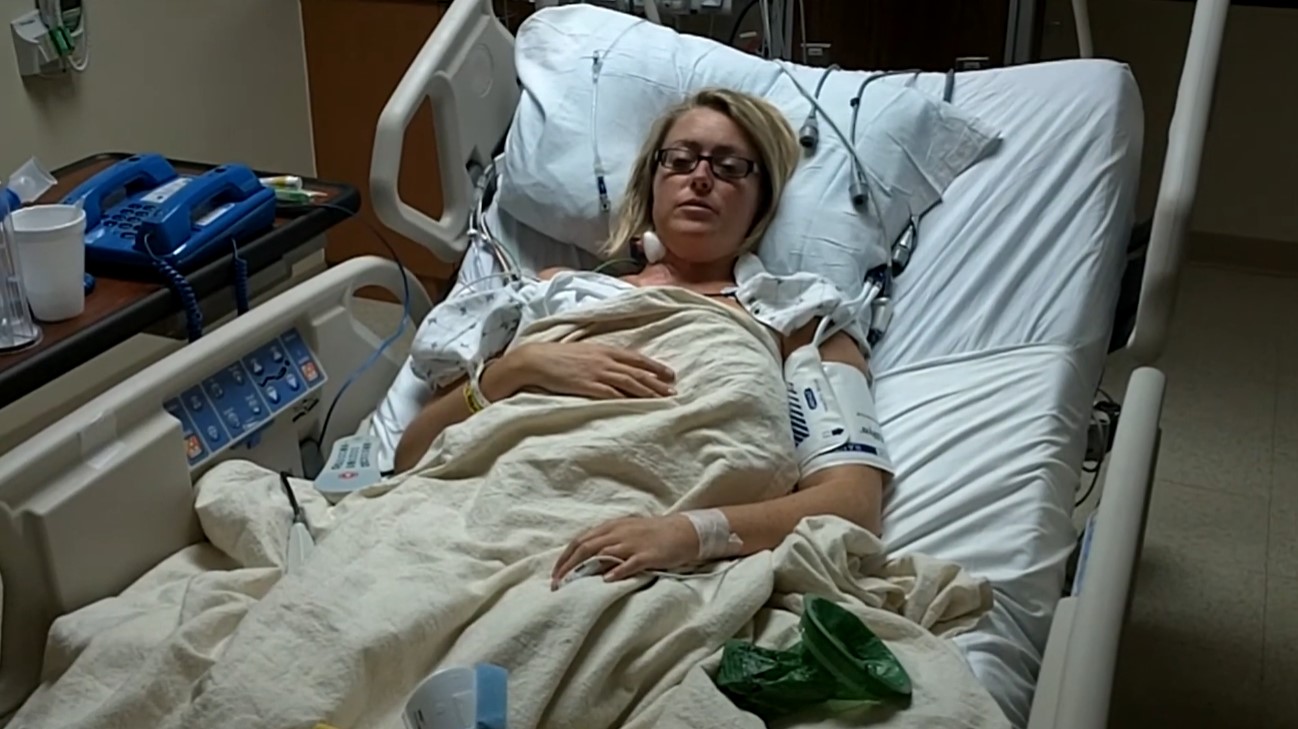
Kortney recovering in the hospital after her first kidney transplant in 2011
Kortney recovering after her first transplant, 2011.
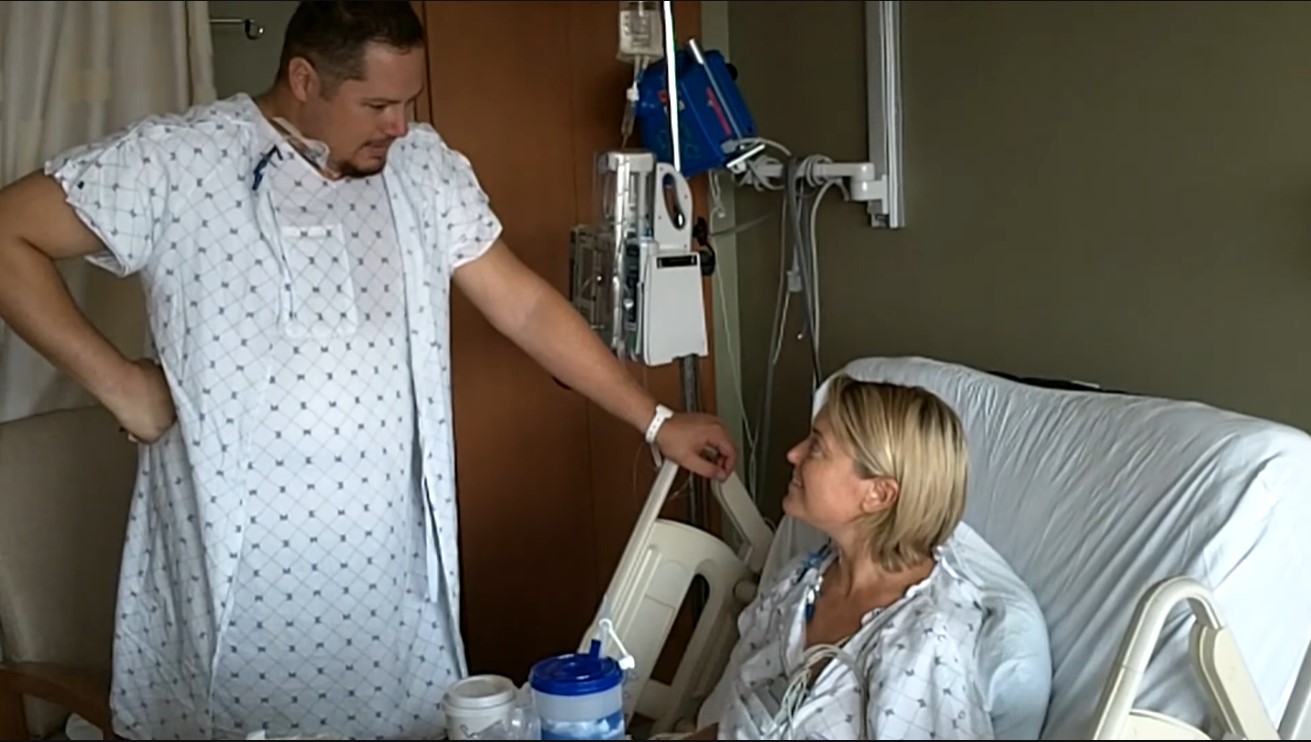
Kortney and Nick around the time of her first kidney transplant in 2011
Kortney and Nick — her first kidney transplant, 2011.

The result was nothing short of a miracle. Within 24 hours of receiving her new kidney, Kortney's lab values rebounded to completely normal. At the time, the hospital told us to expect an average of about 12 years from the transplant — and she has been blessed with 15 wonderful years from that gift. As for Nick, life with one kidney hasn't held him back from anything: same diet, no real restrictions, just keeping an eye on his blood pressure — something we should all be doing anyway.

Now, after 15 cherished years, we find ourselves in need of another life-saving gift. We know what an extraordinary thing it is to ask — Nick has stood exactly where a potential donor stands today. If you have ever felt called to do something that truly changes a life, we humbly ask you to consider being tested. One person's generosity already gave Kortney 15 beautiful years. With your help, we're praying for many more. Thank you, from the bottom of our hearts, for even considering it.

About IgA Nephropathy (IgAN)

Your kidneys are your body's filters — they clean waste and extra fluid out of your blood every single day. IgA Nephropathy (IgAN), sometimes called Berger's disease, is a condition where the immune system makes a mistake. A normal antibody called IgA, which is supposed to help fight infections, instead clumps together and gets stuck in the kidneys' tiny filters.

Over time, that buildup causes inflammation and scarring, and the filters slowly stop working the way they should. There's no cure and no way to undo the damage — it tends to get worse over the years until the kidneys can no longer keep up. When that happens, a person needs either dialysis (a machine that filters the blood for them) or a kidney transplant to stay healthy.

For Kortney, IgAN is why her kidneys have failed. An important thing to understand is that a transplant doesn't "cure" IgAN — the disease can eventually affect a new kidney too, which is part of why her first transplant, after 15 years, now needs to be replaced. But a healthy donated kidney gives her many more years of living fully and well, free from dialysis. That's the gift we're hoping to find.

How to Help

Becoming a Living Donor

You don't commit to anything by getting tested. The first step is simply finding out if you could be a match.

1

Reach Out

Contact us or the transplant center to start a confidential, no-obligation conversation.

2

Get Screened

A simple health questionnaire and blood test check your blood type and compatibility.

3

Full Evaluation

If you're a potential match, the transplant team guides you through every step — at no cost to you.

Start the Conversation
Frequently Asked Questions

What You Should Know

The basics on donation, what to expect, recovery, and costs. We'll keep adding answers as questions come in.

The Donation Process

Where will the transplant take place?

Kortney's transplant will take place at Tampa General Hospital in Tampa, Florida, home of the TGH Transplant Institute — one of the busiest and most experienced transplant programs in the country. A donor would be in exceptionally capable hands:

  • #1 in the nation for transplants by volume in 2024, and among the nation's top five transplant centers for three years running.
  • More than 15,000 organ transplants performed since the program began in 1974 — a milestone reached by only a few dozen hospitals nationwide.
  • 519 kidney transplants in 2025 alone, one of the highest kidney-transplant volumes in the U.S.
  • Recognized as the #1 living-donor kidney transplant program in Florida.
  • One-year kidney survival rates that exceed the national average, per the Scientific Registry of Transplant Recipients (SRTR).

In short: more experience generally means better outcomes — for Kortney and for her donor.

What blood types can donate to Kortney?

Kortney's blood type is A+. For a kidney transplant, a recipient with blood type A+ can safely receive a kidney from a donor with blood type A (A+ or A−) or O (O+ or O−). The positive or negative Rh factor does not affect kidney donation compatibility — so what matters is the letter (A or O), not the plus or minus.

Not sure of your blood type, or not a direct match? Please reach out anyway — a paired kidney exchange may still let you help (see below).

How do I find out if I'm a match?

It starts with one simple, no-obligation step: fill out the secure living donor form at tgh.org/LivingDonorForm. You'll complete a confidential health-history questionnaire and have your blood type checked. If your blood type is compatible, the transplant team runs a few more blood tests (tissue typing and a "crossmatch") to see how well you and Kortney match. You don't have to be a "perfect" match — and even if your blood type isn't directly compatible, a paired exchange (see below) can still let you help. The transplant center handles all of the testing and explains every result.

Prefer to talk to someone first? Contact the Tampa General Hospital Living Kidney Donor Program at (813) 844-5669 or livingkidneydonor@tgh.org. Please mention you're interested in donating to Kortney Pavone.

Do I have to be related to Kortney to donate?

No. Living donors can be family, friends, coworkers, or even people who have never met her — what matters is a healthy, compatible kidney, not a blood relationship. And if you'd like to help but aren't a direct match, you can join a paired kidney exchange (a "kidney chain"): you donate to a compatible recipient somewhere else, and in return another donor gives Kortney a kidney that matches her. Thousands of transplants happen this way each year.

What does the evaluation involve?

If early testing looks promising, the transplant center does a thorough evaluation to make sure donating is safe for you as well as a good match for Kortney. While the exact workup is decided by the transplant team, it generally includes:

  • Blood tests — blood type, tissue typing (HLA), and a "crossmatch" to confirm compatibility, plus checks of your kidney function, blood sugar, and liver.
  • Urine tests — to confirm your kidneys are healthy and working well.
  • Imaging — usually a CT scan (and sometimes other scans) to picture your kidneys and blood vessels.
  • Heart & lung checks — such as an EKG and a chest X-ray to confirm you're fit for surgery.
  • Cancer & infection screening — age-appropriate cancer screenings and tests for infections that could be passed on.
  • Physical exam & history — a head-to-toe checkup and review of your medical and family history.
  • Psychological & social evaluation — a meeting with a psychologist or social worker to make sure you're ready and supported.

You'll also be assigned an Independent Living Donor Advocate — someone whose only job is to look out for you, not the recipient. You can pause or stop the process at any time, for any reason, and it stays confidential.

How long does the whole process take?

It varies from person to person. Initial blood-type screening can happen within a few weeks, and the full evaluation and scheduling generally takes a few months from first contact to surgery, depending on test results and timing. Because Kortney needs a kidney, sooner is better — but the team will never rush your safety. Tampa General will confirm the exact timeline for your situation.

How It Affects the Donor

Is it safe to live with one kidney?

Yes. We're born with two kidneys but only need one to live a full, healthy life. After donation, your remaining kidney grows slightly larger and takes over the work of both. Living donation has been performed safely for decades, and donors are carefully screened beforehand specifically to confirm they'll thrive with one kidney. If the evaluation ever found that donating wasn't safe for you, you simply would not be approved — your health always comes first.

What is the surgery like?

Donor surgery (called a nephrectomy) is almost always done laparoscopically — through a few small incisions rather than one large one. It typically takes about 2–3 hours under general anesthesia, and most donors stay in the hospital just 1–2 days. The transplant team handles everything and keeps you comfortable throughout.

Will donating affect my future health or lifespan?

Decades of research show that living kidney donors live just as long as comparable non-donors, with no meaningful increase in long-term health risk. Donors receive lifelong follow-up to keep an eye on the remaining kidney, and the vast majority go on with completely normal lives. You'll review your individual situation in detail with the transplant team before making any decision.

Can I still exercise, work, and live normally afterward?

Absolutely. Once you've fully recovered you can return to work, exercise, travel, and normal life — including serious fitness training. Donors are generally advised to stay hydrated, keep a healthy weight, avoid heavy regular use of anti-inflammatory painkillers like ibuprofen, and keep up routine checkups — all things that are good for anyone. Most donors need no special diet.

What to Expect After Transplant

What is recovery like for the donor?

Most donors are up and walking the day of or the day after surgery. The first week or two involves some soreness and fatigue, managed with pain medication, and you'll avoid heavy lifting for about 4–6 weeks while the incisions heal. Most people feel substantially back to themselves within a few weeks and fully recovered within 1–2 months.

How long will I be off work?

It depends on your job. People with desk or remote jobs often return in about 2–3 weeks, while those with physically demanding work may need 4–6 weeks or more. The transplant team will give you a recommendation based on your recovery and the kind of work you do.

What follow-up care will I need?

Living donors get follow-up checkups at set intervals after surgery (commonly around 6 months, 1 year, and 2 years), where the team checks your kidney function and overall health with simple blood, urine, and blood-pressure tests. After that, keeping up with a yearly physical with your regular doctor is usually all that's needed.

Insurance & Costs

Will donating cost me anything?

In nearly all cases, the donor pays nothing for the evaluation, surgery, and hospital stay — those medical costs are covered by the recipient's insurance (Kortney's coverage), not yours. What insurance typically does not cover are indirect costs like travel, lodging, and lost wages — but assistance programs exist for exactly those (see below). The transplant center's financial coordinator will walk you through the details.

What about travel, lodging, and lost wages?

Help is available. The National Living Donor Assistance Center (NLDAC) reimburses qualifying donors for travel, lodging, meals, and certain lost-wage and dependent-care costs related to donating. Some employers also offer paid donor leave, and additional grants may apply. The transplant team's social worker or financial coordinator can connect you with these resources.

Will donating affect my own insurance later?

Under the Affordable Care Act, you cannot be denied health insurance or charged more for having been a living donor. For life and disability insurance, protections vary, and rare cases of higher premiums have occurred — so it's worth reviewing your policies. Many states have also passed additional living-donor protection laws. The transplant team can explain what applies to your situation.

Ready to Take the First Step?

If you'd like to explore becoming a living kidney donor for Kortney, the process starts directly with the transplant team. Just fill out the secure living donor form below — it's confidential and there's no obligation.

Tampa General Hospital — Living Kidney Donor Program